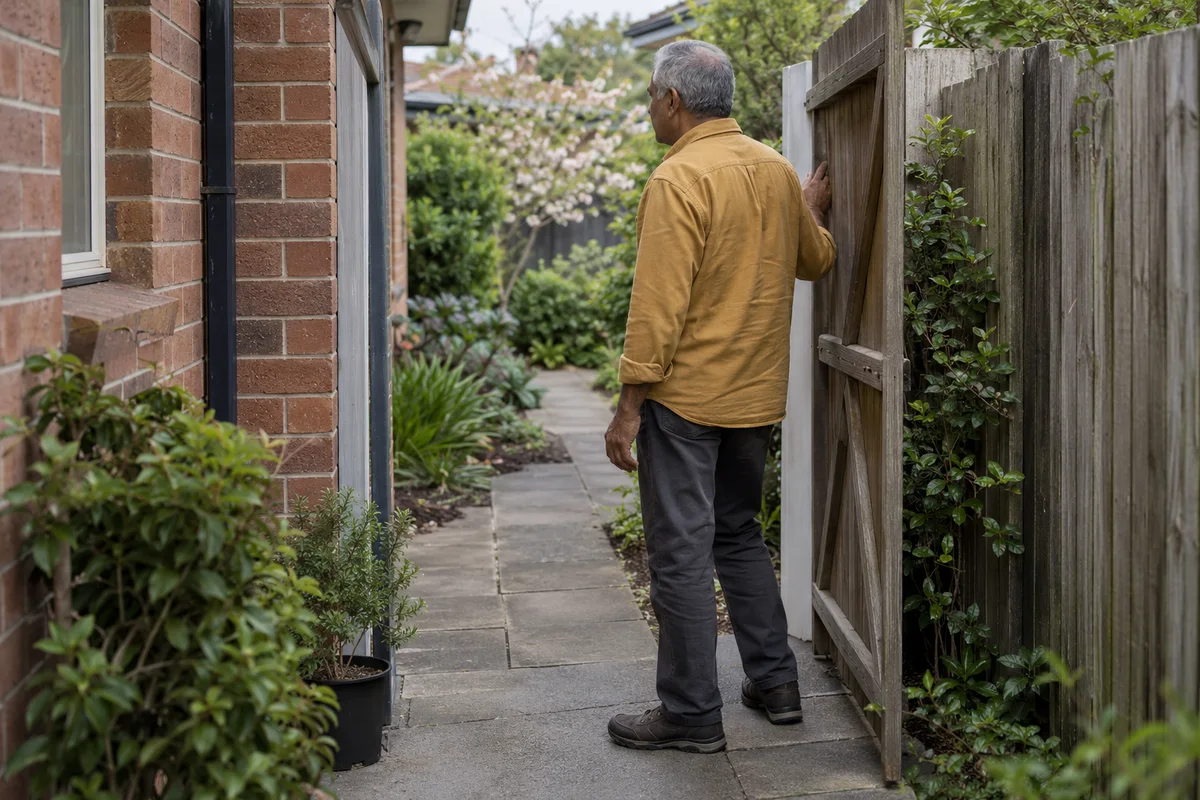
A garden tidy can look straightforward from the backyard and quite different from the gate. A narrow opening, a tight corner or a flight of steps may affect which equipment can reach the work area and how cuttings can be carried out. Before requesting a spring tidy around Bundoora, describe the whole route rather than just saying there is side access.
You do not need to decide whether a particular machine will fit. Green Captains assesses the work, equipment and access together before agreeing the scope and price. This checklist helps you explain the physical route for a garden-maintenance enquiry, without promising that every property can be serviced in the same way.
Start with the actual gate opening
If it is easy to do from stable ground, open the gate normally and measure the clear gap at its narrowest point. Measure between the parts that remain in the way, rather than using the advertised gate size or measuring the fence opening with the gate shut. A latch, post or partly opening gate can reduce the usable space.
Say whether the gate opens fully, catches on the paving or has a fixed section beside it. If measuring is awkward, leave it: a description and optional photo can start the assessment. There is no single minimum gate width that guarantees access for every job, because the equipment and working method depend on the accepted scope.
Do not remove hinges, force a stiff gate or alter a boundary to prepare an enquiry. Tell us what is there and ask whether an onsite assessment is needed.
Follow the route beyond the gate
An opening is only one part of the journey. Look along the accessible route to the lawn or bed and note:
- corners where the path changes direction;
- steps, raised thresholds or changes in level;
- fixed taps, downpipes, air-conditioning units or raised beds;
- low branches or other overhead restrictions; and
- loose, uneven or soft sections of ground.
A straight path and a path with a tight turn may need different assessment even when their widths are similar. If you can measure a clear narrow section easily, include that measurement and explain where it is. Do not assume a gate measurement proves the whole route is suitable.
Describe known problems from a safe position. There is no need to enter dense growth, test unstable surfaces or move equipment to investigate something you cannot readily see. An uncertain section should stay uncertain until it can be assessed.
Include the route for taking cuttings out
Think about the return journey as well as getting tools in. Cuttings may need to travel from the work area to a suitable green bin or an agreed collection point. Mention the distance in ordinary terms, any steps on that route and whether the bin is accessible.
Waste carrying and loading can affect the work involved. Standard onsite cleanup is included in the agreed job; off-site green-waste removal is quoted separately. A suitable bin with room may help, but neither a bin nor a removal vehicle should be assumed to fit through the side gate. Discuss the practical arrangement before work begins. See the green-bin or waste-removal guide for that separate decision.
If the only route passes through the house or someone else's land, say so in the enquiry. Do not assume that route is accepted or that permission exists. Any proposed alternative needs agreement before it becomes part of the plan.
Separate movable belongings from fixed obstacles
A hose, a small pot or a child's toy is different from an installed unit, a heavy planter or a damaged gate. Tell us which items you can reasonably put aside before a confirmed visit and which must remain. Moving heavy objects, dismantling structures or repairing access is not automatically included in a garden tidy.
Keep the area as it is if moving something could cause harm. Mention known irrigation lines or fittings near the route, and identify plants you want retained. The aim is to assess a workable path, not to clear everything indiscriminately.
Secure pets and sensitive access arrangements are discussed privately. Do not include key locations or gate codes in public photos or reviews.
Give a short route description with your request
A useful enquiry might say: “The garden bed is behind a side gate. The gate opens fully, then the paved path turns beside a raised bed. There are two steps before the lawn. The green bin is at the front. Please assess whether the route suits the proposed work.” This is a fictional example, not a completed Green Captains job.
Add your suburb, the area you want tidied and any easy measurements you have. Optional photos can show the open gate, the turn and the work area from accessible ground. The quote-photo checklist explains how to keep those pictures useful and private.
Green Captains is owner-operated and serves approximately 20 km around Bundoora. A direct description helps us discuss a realistic scope before bringing equipment to the property. Restricted access may change the method, price or suitability of the job; a photo or measurement alone does not confirm acceptance. Your preferred visit time remains a request until confirmed.
Request a garden-tidy quote with the route and the result you need. Once the scope, price and access are agreed, you can also ask whether regular care would suit the garden afterwards.