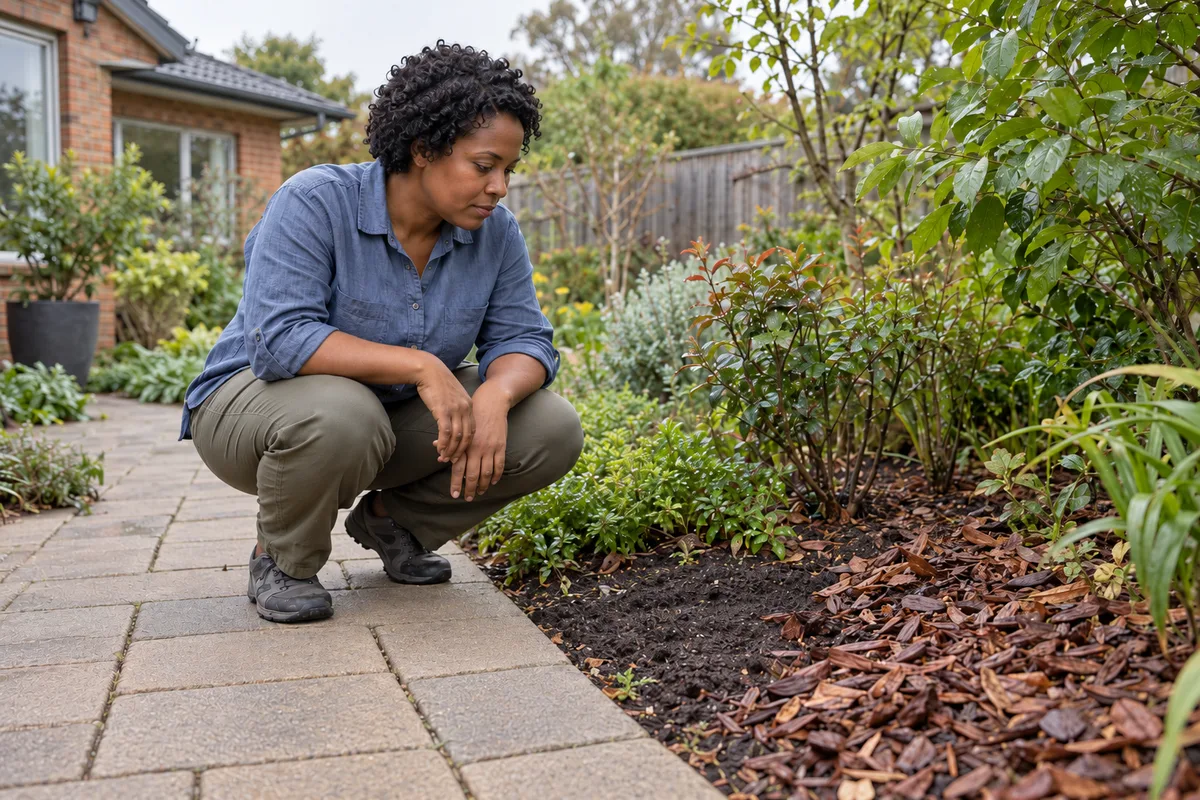
After spring rain can be a useful time to mulch, if the soil is moist and has drained. If it is still dry beneath the surface cover, check that water has actually reached the soil first. If the bed has standing water or remains saturated, wait before working on it. Around Bundoora, the condition of your garden bed matters more than a rule to always mulch before or after rain.
Sustainable Gardening Australia's water-smart gardening notes recommend moist soil before mulching, generally after spring rain and before summer drying. That is a starting point for assessing a bed, not a forecast or a promise that every garden is ready on the same day.
A quick mulch-or-wait decision card
Use what you can observe from a firm, accessible path. You do not need to dig deeply or step into a soft bed.
| What you notice | A useful next step |
|---|---|
| The surface mulch is wet, but the soil beneath looks dry | Do not assume rain has soaked through. Recheck the soil before adding another layer. |
| The soil is moist, drained and accessible | Consider suitable mulch after checking the plants and coverage already there. |
| There is standing water or the bed is saturated | Wait before working the soil or adding more material. Persistent waterlogging needs assessment. |
| Existing mulch already covers the bed | Check its condition and depth instead of automatically topping it up. |
| Mulch is piled against trunks or over low plant growth | Check placement and the particular plant's needs before adding more. |
The card helps you decide what to check next. It does not diagnose drainage or identify plants from a photograph.
Check beneath the cover, not just the forecast
A wet-looking layer of bark does not tell you everything about the bed below it. Where it is easy to reach from stable ground, look beneath a small patch of existing mulch without disturbing roots or irrigation. If you cannot safely see the soil, leave that detail uncertain rather than entering dense growth.
Rain timing is only part of the decision. If the bed is already moist and drained before forecast rain, the forecast alone does not establish a reason to wait. If it is dry, do not treat a shower on the calendar as proof it has been watered. Check the actual conditions again.
This is a practical way to apply the moist-soil principle, not a fixed watering instruction. Plant needs, the existing material and the particular site still matter.
Let a saturated bed drain first
More mulch is not a repair for standing water. Yates' flood-recovery guidance advises letting flooded soil drain naturally and avoiding work while it is wet, because working wet soil can compact and damage its structure. The relevant lesson here is to wait before working a saturated bed, not to treat an ordinary spring shower as a flood.
Avoid walking repeatedly through soft garden soil to inspect it. If water keeps pooling, record where and when it happens from a safe position and seek an appropriate assessment. A garden tidy should not be assumed to include drainage diagnosis or repair.
Check the material and plants before topping up
There is no single layer depth suitable for every mulch and planting. ABC Gardening Australia explains that medium or coarse bark lets rain pass through more readily than fine material, and that the appropriate thickness depends on the material. Some plants also need particular treatment; its guide gives exposed bearded-iris rhizomes as one example.
Keep mulch away from trunks and check low-growing plants before covering more ground. If you do not know what a plant needs, get plant-specific advice rather than applying one rule across the whole bed. Do not use this article's generated editorial photo as a plant-identification reference.
If weeds are the main issue, read the separate guide to weeds returning in garden beds. Mulch may help suppress growth, but adding it does not replace deciding which plants stay and what weed work is needed.
Need the bed tidied before deciding what comes next?
A bed with crowded weeds can be difficult to assess. Green Captains' garden-maintenance service includes weeding and general garden-bed tidy-up within an agreed scope. Identifying plants to retain and clearing agreed unwanted growth can make the area easier to review, without treating all growth as waste or promising that mulch will solve every problem.
For a useful enquiry, prepare your suburb, the bed or area needing attention, plants to keep, accessible paths and what you have noticed after rain. Optional photos can show the whole bed and the particular concern; keep addresses, faces and private access details out of images. You can say “I would like the agreed weeds removed before deciding whether to refresh the mulch” without choosing materials in advance.
Request a garden-bed tidy quote for that defined preparation work. Green Captains serves approximately 20 km around Bundoora. Mulch supply or spreading is not assumed to be included; ask for any additional work to be assessed and agreed separately. Standard onsite cleanup is included in the agreed job, while off-site green-waste removal is quoted separately. Preferred timing remains a request until confirmed.
Sources and limits
Reviewed 20 October 2026: Sustainable Gardening Australia, Water Smart Gardening notes, Meaningful Mulch section; ABC Gardening Australia, How To Mulch; and Yates, Flood Recovery for Gardens and Lawns. These sources support general principles; they are not a site-specific assessment, current weather report or guarantee of a service outcome.