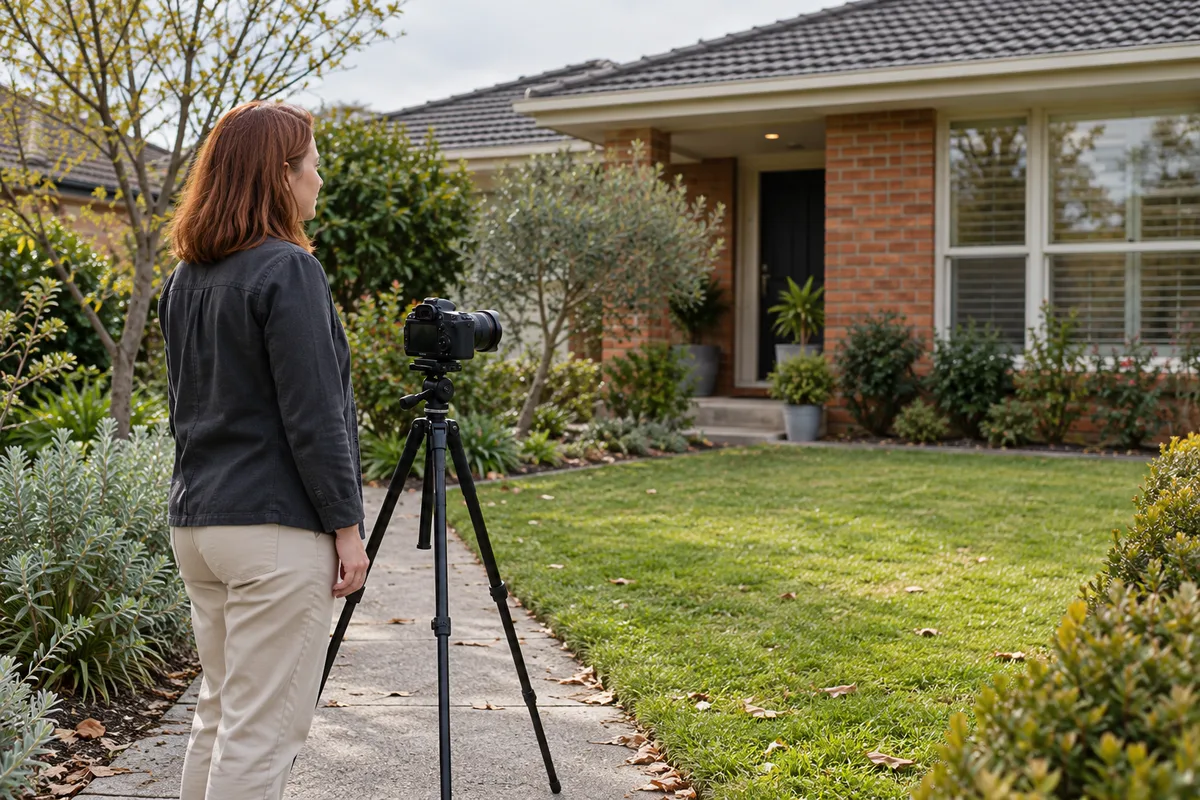
Plan the garden preparation around two dates: the listing photography and the first open home. Agree the areas and camera views with the agent, have the owner or their authorised representative approve a bounded first tidy-up, then decide who will check growth, fallen leaves and presentation before inspections. A garden prepared for a photograph is not a promise it will stay in that condition throughout a campaign.
For a property around Bundoora and Melbourne’s north, this is a practical coordination job before it is a gardening booking. The photographer sets the image brief; the agent coordinates the campaign; the owner or their authorised representative confirms the gardening scope and cost. An agent’s request for a clearer view does not automatically authorise removing plants or adding work.
A two-date garden preparation card
Copy these headings into your campaign notes. Leave unknowns marked for confirmation rather than assuming someone else will handle them.
Date one: the listing photographs
- Photo appointment: confirmed date and time, plus any agreed weather contingency.
- Views required: front approach, outdoor living area, backyard and any other agreed view; ask whether side areas will appear in drone or elevated images.
- Garden scope: name each lawn, edge and bed to be attended to, and identify plants or features to retain.
- Access: who will provide authorised access, secure pets and make the work areas accessible; arrange keys privately.
- Waste: suitable onsite green-bin space or separately quoted off-site green-waste removal, including where cuttings can be carried out.
- Approval: who can accept the price and any proposed extras, and how they can be reached.
- Readiness check: who will look at the actual condition before the photographer arrives and raise anything unfinished.
Date two: the open homes
- Inspection dates: record the first open home and any later dates already known.
- Between-date check: nominate who will observe new growth, fallen leaves and changing ground conditions.
- Reset scope: agree whether a further mow, edge or garden tidy is needed; do not assume the first visit includes return visits.
- Movable items: assign bins, hoses, toys and outdoor belongings to the appropriate person, rather than assuming the gardener moves everything.
- Change approval: keep the decision-maker and accepted scope clear if weather, timing or work requirements change.
The card separates a larger preparation visit from later upkeep. It also gives a gardener something more useful to assess than “make it ready for sale”.
Start with the photographer’s actual brief
Ask the agent which outdoor spaces matter to the planned photographs. This avoids guessing at camera angles or spending the whole visit on an area that is not part of the brief. It does not mean concealing a defect: known hazards or property problems need appropriate attention, not a better angle.
RE Photos’ seller preparation guide includes lawn and loose outdoor-item preparation and notes that side areas may appear in drone photography. Those are useful prompts to discuss with the actual photographer. Its general checklist is not a Green Captains service list or permission to carry out work at height.
For the garden itself, distinguish straightforward presentation tasks from changes that need a separate decision. Lawn and edge work, bed weeding and suitable pruning can be considered within an agreed garden-maintenance scope. Removing established plants, major hedge reduction or specialist tree work should not be slipped into a photo-day tidy-up. Plant suitability, access and safe working conditions still determine what can be accepted.
Allow for the condition you find
A fixed rule such as “mow the day before” ignores the actual lawn, access, weather and time available. Tell the gardener how long the growth is and whether the ground is soft or wet. Ask for an assessment rather than promising the photographer an unconfirmed finish date.
In Melbourne’s spring, make the plan conditional on the property’s condition when the work is assessed. If the original scope cannot reasonably be completed before photography, the owner and agent can discuss priorities and the campaign timetable. Do not assume a short deadline creates availability or makes unsuitable work safe.
Keep the useful presentation priorities explicit: which lawn and edges, which beds, what growth should remain, and how the work will be tidied. Standard onsite cleanup forms part of the agreed Green Captains job; off-site green-waste removal is quoted separately. General rubbish, heavy belongings and other trades’ work need their own agreement and are not automatically garden waste.
Plan what happens after the shoot
Photography records one moment. Before each open home, someone should check whether the garden still matches the agreed presentation standard. A few fallen leaves and a lawn needing another visit are different amounts of work; record the actual condition before requesting a return.
A one-off tidy-up can establish the starting point. Agreed regular care may help maintain the relevant lawn, edges and beds during the campaign, but its tasks, visit frequency and price need confirmation. No schedule guarantees the same appearance between visits, and it does not guarantee a sale result.
Where tenants occupy the property, coordinate access through the appropriate authorised people and existing arrangements. For shared grounds, identify the relevant owners-corporation or strata authority before requesting changes. The seller’s private garden and common property are not interchangeable scopes. This card is a planning aid, not tenancy or legal advice.
A useful enquiry includes both dates
A fictional example: “The agent has booked photography for one date and the first open home for the following week. Please assess the front lawn, its edges and two garden beds before the shoot, and quote any suitable follow-up care separately. The owner will approve the work. We can discuss authorised access and green-waste arrangements privately.” This is an example request, not a Green Captains client or completed job.
For an assessment within approximately 20 km of Bundoora, request a garden-preparation quote. Include the suburb, the two campaign dates, the specific areas, current-condition photos if useful, access constraints and who can authorise the scope. Keep keys, codes and private access details out of public images. Preferred dates remain requests until the scope, price and attendance are confirmed.
Source check: RE Photos’ seller preparation guide was reviewed on 29 October 2026 for photography-preparation context. Confirm the particular photography requirements with your agent and photographer.