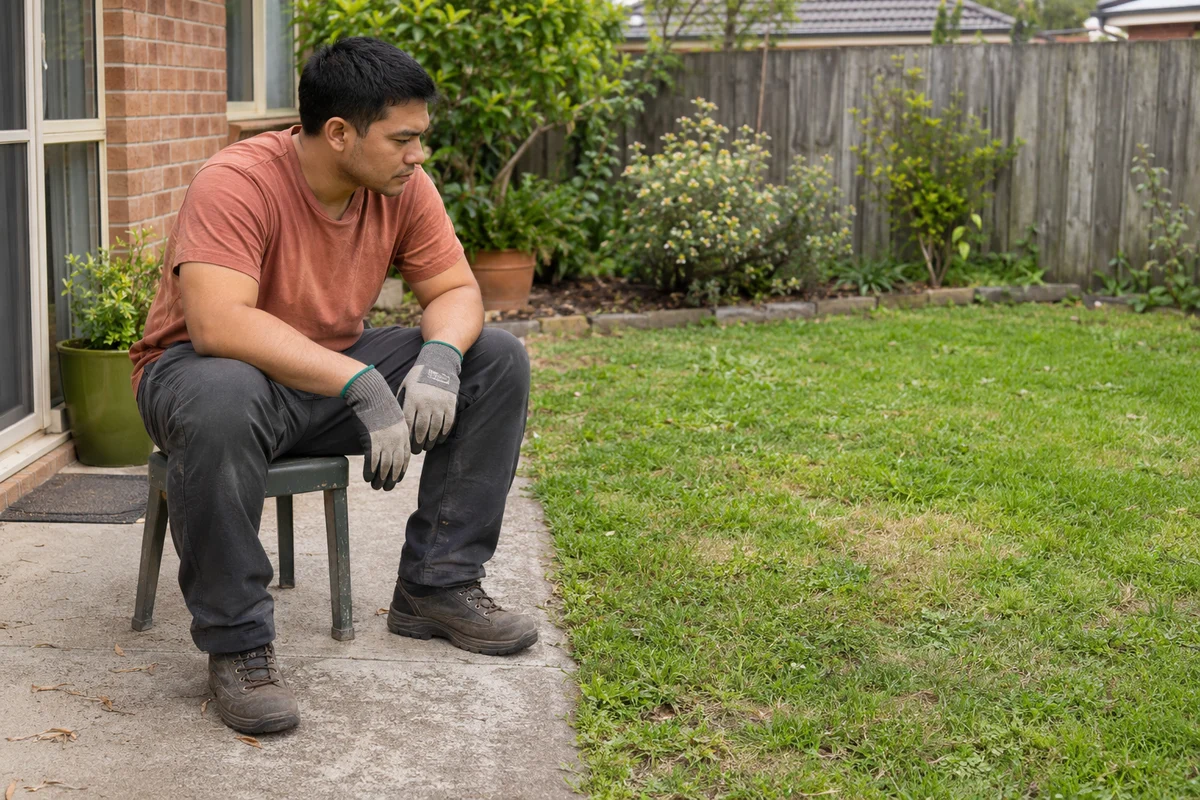
If prickles are already making your lawn uncomfortable, an ordinary mow is not the same job as dealing with bindii. Start by confirming what is growing and whether prickly seeds have formed. Then agree what can be done now, what is included in the visit and what needs a later seasonal plan.
For a lawn around Bundoora, describe the prickles before booking rather than simply asking for a shorter cut. Green Captains can assess the lawn and proposed maintenance scope; a mowing booking should not be treated as a promise to remove every prickle.
Your first decision: fresh growth or existing prickles?
| What you have noticed | Useful next step |
|---|---|
| Low, spreading weed growth, but you are unsure what it is | Take a clear photo from a safe position and ask for identification before choosing a treatment. |
| A small area with prickly seeds already present | Point out its location and ask whether careful removal can be included in an assessed scope. Keep that separate from the mowing price. |
| Prickles across much of the lawn | Ask for a realistic current-season assessment and a plan for checking new growth earlier next season. Do not assume a single visit will make it barefoot-ready. |
| A lawn cut very short, with thin or bare patches | Discuss the grass type and suitable mowing approach as well as the weed issue. Cutting lower is not automatically the answer. |
This is a way to brief the gardener, not a diagnosis from a photograph. Different weeds can be called “bindii”; the generated editorial image above is not a plant-identification reference.
Why timing changes the answer
Yates’ bindii guide describes a low-growing weed whose flowers mature into prickly seeds in spring and summer. It places the better control window before flowering and seed formation, from late autumn through winter and early spring.
That means “prevent next season’s prickles” and “deal with the prickles here now” are different requests. If you have already felt them, say so. Do not assume treating the plant is the same as physically removing seed already present.
The date alone cannot tell you which stage your lawn has reached. Include what you can actually see, where the problem occurs and when you first noticed it. There is no need to walk barefoot through the lawn to test it.
What an ordinary mowing visit covers
A lawn-mowing visit addresses the agreed lawn area and its mowing requirements. Weed identification, targeted removal, chemical treatment or lawn renovation are separate decisions, not automatic extras hidden inside “mow and tidy”.
ABC Gardening Australia notes that bindii is a flat, cool-season weed and can thrive where lawns are cut too low. Its bindii prevention explanation supports reviewing the cutting approach rather than repeatedly scalping the lawn. The appropriate height still depends on the grass and conditions; this guide does not prescribe one height for every lawn.
Tell the gardener about affected patches before equipment is brought onto them. Yates notes that seeds can travel on shoes, animals and tools, including mowers. Discuss handling of the affected material rather than assuming it should be scattered elsewhere.
Agree the extra work before the visit
A useful quote separates three things:
- the mowing and edging you want completed;
- any weed-removal work that can reasonably be assessed and accepted; and
- handling of the resulting material and any off-site disposal.
Standard onsite cleanup is included in the agreed Green Captains job. Off-site green-waste removal is quoted separately. Ask how material containing prickly seeds should be handled; do not assume it belongs in a particular council bin without checking the applicable rules. Our green-bin or waste-removal guide explains the wider disposal decision.
Chemical treatment is not assumed to be part of a Green Captains mowing booking. If considering a lawn product yourself, confirm the weed, grass type and current product-label directions with a suitable adviser. This article does not recommend a product, mixing rate or spray programme.
Send a lawn brief, not just “remove the bindii”
A useful enquiry might say: “The front lawn needs mowing, but there are prickles beside the path and in two other patches. Please assess what can be done about those areas and quote any additional work separately.” This is a fictional example, not a customer result.
Include your suburb, approximate lawn size, access and optional photos showing the whole lawn and a close view of the concern. Keep private access details out of images. Mention pets or how the area is used so the visit can be discussed properly.
Request a lawn-maintenance quote within approximately 20 km of Bundoora. Agree the scope, price and attendance first, then ask when it would be useful to review new weed growth before another seed-setting season.
Sources reviewed 18 November 2026: Yates’ bindii guide and ABC Gardening Australia’s bindii FAQ, linked above. Their general gardening advice is not evidence of the weed species or condition at a particular property.